

Did I Find What I Was Looking For at HR Tech? Not Entirely.
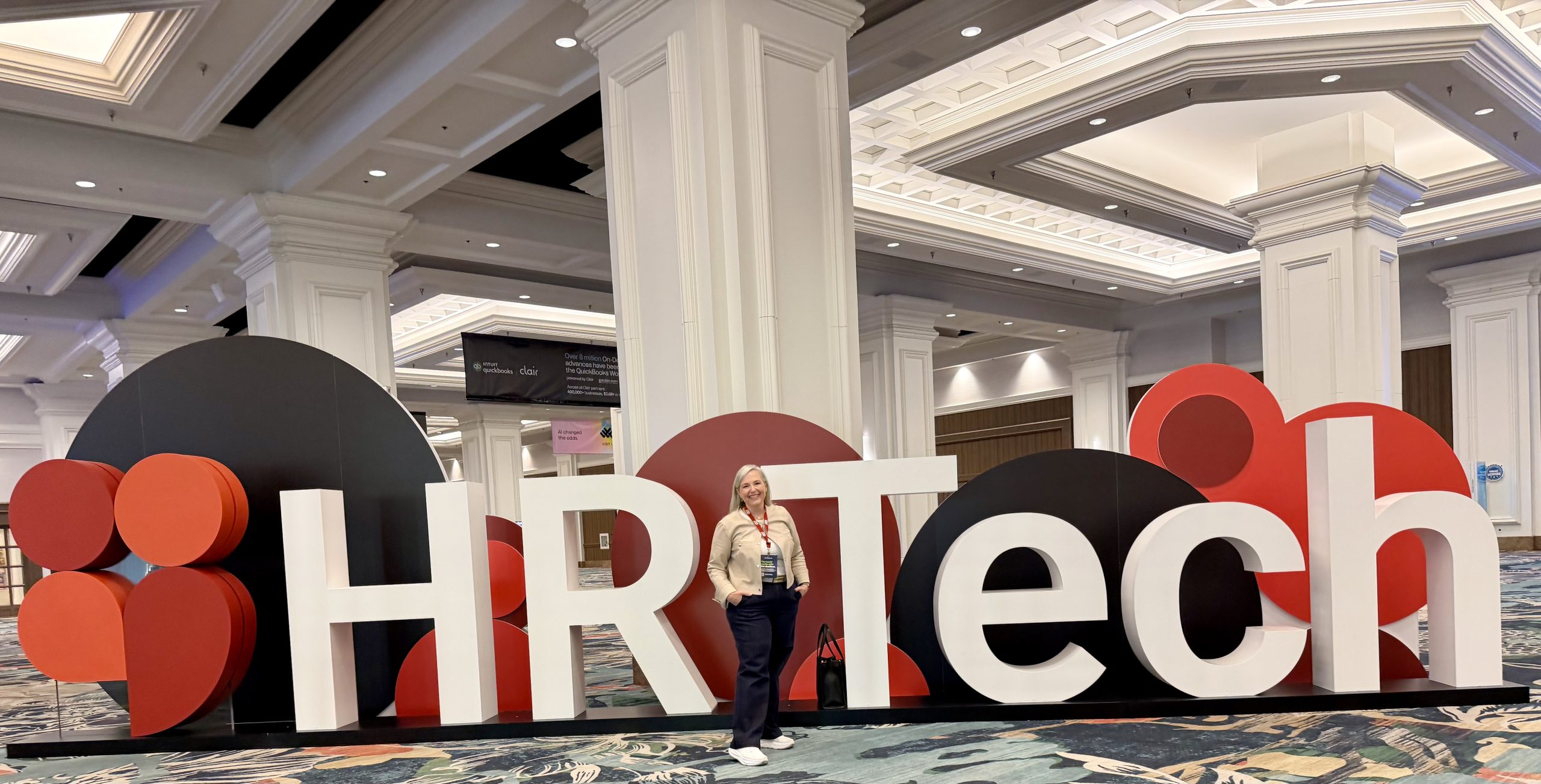
Before heading to Las Vegas, I laid out what HR tech vendors would need to solve before I’d trust them with a candidate. After 25+ years in recruitment, I wasn’t there for flashy demos. I wanted to know whether any of this technology could handle real hiring: unconventional career paths, genuine bilingual fluency, and the judgment that software so often flattens into a checkbox. I attended HR Tech on a media pass, and the opinions here are my own.
So, did I find what I was looking for? Not entirely. But I came home with a better picture of where this industry is headed.
Everyone agrees on the problem
Nearly every conversation started in the same place: we have a volume problem. Easy-apply buttons and AI-written resumes have buried recruiters, and automation has become the default answer. Conversational screening tools promise to talk to everyone and screen everyone, without any exception.
On paper, that sounds inclusive and high-touch. In practice, I’m not convinced. A bot that chats with thousands of applicants can give people a false sense of progress. If it ultimately rejects them against thresholds someone had to define, you haven’t humanized the process. You’ve automated the runaround. And if I don’t want to spend time with unqualified candidates, I still have to tell the tool what “qualified” means for every client and every role. The work didn’t disappear. It moved.
Several vendors also told me that candidates can always opt out of being screened by AI. That’s good. But think about what it means in practice. Every candidate who opts out lands back on the desk of a recruiter or HR professional, who then has to either talk to them or reject them, manually. The volume doesn’t go down. It just comes back to the same people.
When I asked Sean Fahey of VidCruiter how he balances AI screening with human evaluation, he explained that their clients choose the model: full automation, human-only review, or a combination. In the combined approach, the platform compares AI and human scores against the same rubric, then uses the results to coach either the software or the people doing the evaluating. As for candidates who opt out of AI evaluation, the system moves them into a human review folder, where a person has to look at their profile. Not every client turns that option on he says. It’s a smart design, and it confirms my point: opting out doesn’t remove the work. It routes it back to a human.
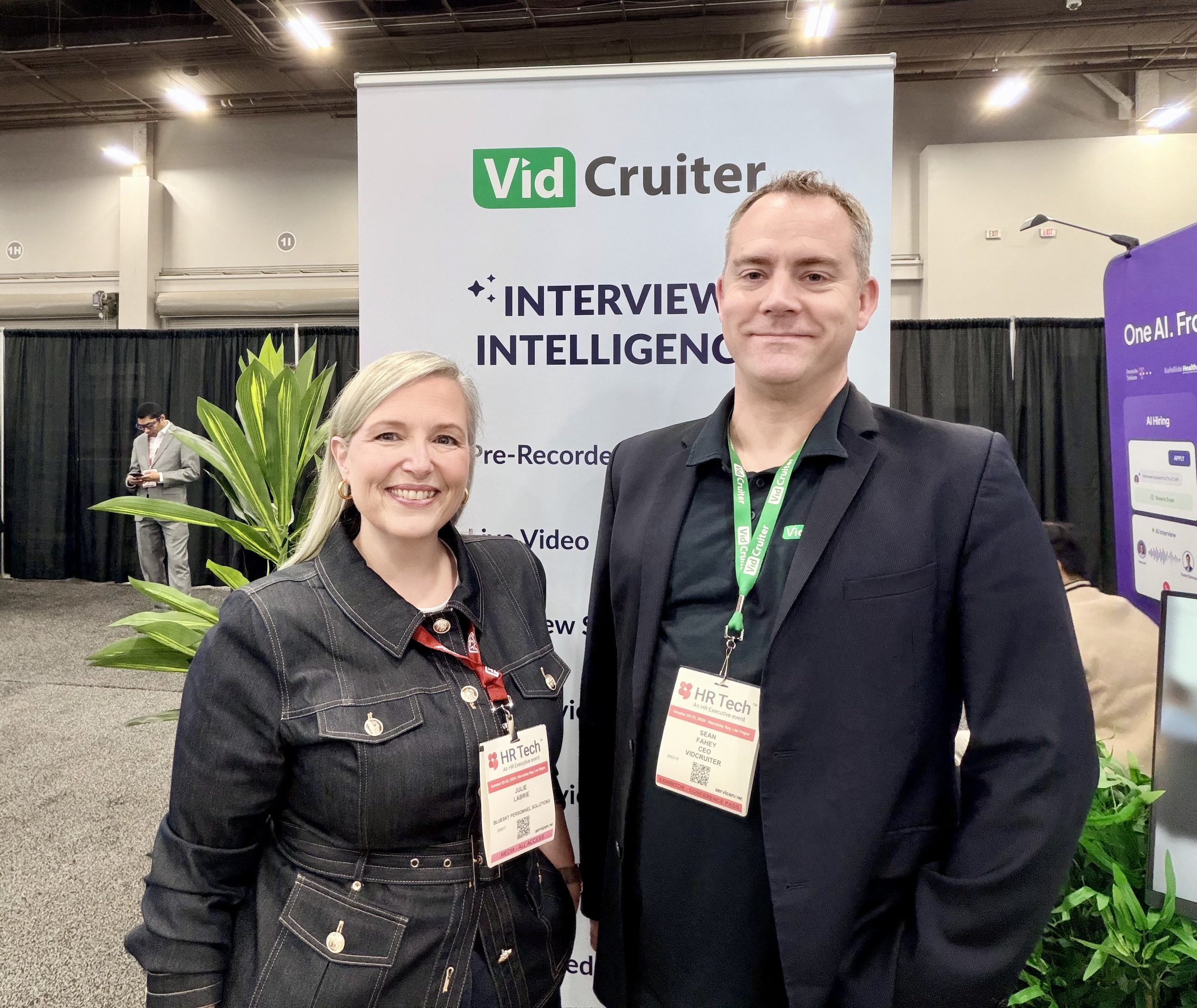
Julie Labrie and Sean Fahey
“It does a great job once you train it”
When I asked vendors how their tools evaluate non-linear careers or real bilingual depth, I kept hearing the same answer: the tool is excellent once you train it. Just feed it enough criteria.
That’s where I get stuck. Training the tool means recruiters spend hours configuring hyper-specific criteria, tweaking search parameters, managing rigid rule bases, and constantly troubleshooting edge cases when promising candidates slip through the cracks. Instead of evaluating candidates, their day becomes an ongoing cycle of system administration and algorithmic maintenance. Are we hiring recruitment professionals to connect with talent, build relationships, and assess human potential, OR are we hiring them to maintain an algorithm?
Then there’s the question of what we’d be teaching it. Training a tool means turning experience into criteria, and criteria can only capture what we already know to look for. Take Maryanne Mesic, our Senior Personnel Consultant, who has been with BlueSky for over 10 years. When she first came to us, she had spent years as a stay-at-home mom and wanted to return to work in our industry. Criteria built around a traditional resume would have screened her out, and I’m confident most AI tools would have too. But I talked to her, and I went beyond the resume. She’s been a wonderful addition to our team ever since.
And it’s not only candidates who lose out. Junior recruiters build instinct and experience by reading hundreds of messy resumes, listening for hesitation in a candidate’s voice, and taking a chance on someone whose background doesn’t fit the template. That’s how coordinators become leaders. If we hand baseline evaluation to software and spend our energy teaching machines instead of mentoring people, we remove the bottom rungs of the ladder. A few years from now, we’ll wonder where the next generation of decision-makers went.
Hiring fraud is a trust problem
Hiring fraud came up in almost as many conversations as volume did, and nobody had a tidy answer. The cycle is easy to see. Companies automated the top of the funnel to cope with the flood of applications. Candidates picked up generative AI to get through it. Now vendors are pitching a third layer of automation to catch what the first two created, and trust is what gets lost along the way.
The stakes go beyond HR. When a fraudulent or unqualified candidate reaches a company, the software vendor isn’t the one making the apology call. The recruiter and the company are. And because data is now strategic infrastructure, a flawed or unvetted source doesn’t produce one bad decision. It produces them at scale, across systems that are more connected and more fragmented at the same time.
So what do we do right now? Be careful, and slow down. Pick up the phone. Book the live video interview. Meet in person when you can. When anyone can prompt an AI to sound polished, an unscripted conversation is still the most reliable check we have. HR is in the trust business whether we like it or not, and that trust gets built between people.
Bilingualism is the real authenticity test
Nowhere is this clearer than in bilingual hiring, and it’s where I think AI demos fall short, especially in Canada. AI can translate flawlessly and draft an immaculate bilingual cover letter. But bilingualism at work isn’t translation. It’s tone, cultural nuance, and emotional intelligence, and it’s the ability to move between French and English in a boardroom when the pressure is on. A self-reported checkbox can’t tell you that, and neither can a screening tool. Real capability shows up in conversation. Always.
What I want vendors to build
I want vendors to build tools that make us more efficient without making us spend hours training them. If a tool only works once I’ve configured it for every client and every role, it hasn’t saved me time. It has given me a new job and also taken someone else’s job! The best technology takes on the administrative work, so recruiters can spend their time where people can’t be replaced: talking to candidates, reading between the lines, and making the call.
I put a similar question to Jessica Miller-Merrell: what’s her top advice for making sure technology gives recruiters time back for judgment instead of making decisions for us? Her answer was to build systems around work that’s easy to automate, and to keep AI out of the judgment call, such as whether a candidate moves forward or receives an offer. She’d use it to keep candidates warm, answer common questions, and analyze sourcing and retention data. She runs about seven AI agents in her own business, each working within parameters she sets, and says they save her about three hours a day. Her goal is to use AI to make the experience more human for job seekers, not less.

Julie Labrie & Jessica Miller-Merrell
Where I landed
I’m not anti-technology. We use good tools ourselves, and the right ones can cut administrative clutter, protect data, and give recruiters their time back. My line is judgment. As AI becomes the air we breathe in HR, we need to decide on purpose what gets done by AI and what stays with people, rather than letting the tools decide for us. I believe people make better hiring decisions than algorithms, and that a tool is only as good as the people who learned their craft well enough to question it. Any technology that asks us to give up that judgment, or to stop developing the people who will carry it forward, hasn’t earned our trust yet.
I also shared my final takeaways from the floor in a short video
At BlueSky, finding the needle in the haystack, especially in bilingual talent, starts with real conversations. If you’re hiring and want someone who knows the market, we’d love to talk.


